Lantern 4
Against academic freedom | woke private schools | Catherine Hitz | recommended reading

Some cheering reactions to the new title,
“Here's 'Into the Lantern Waste' - an album all about Narnia.”
“Did you know that Windlicht (Storm Lantern) was the name the White Rose students (in Nazi Germany) gave to their informal magazine?”
(I did not)
The fightback
The ‘marketplace of ideas’ is perhaps liberalism’s central creed: the hope that truth is protected in societies that make space for - and do not suppress - the free exchange of ideas. The educational corollary is that children should be introduced to ideas from every perspective and that schools should be neutral spaces that do not take sides.
In his new essay ‘Against Academic Freedom’, Patrick Deneen takes aim at this principle, showing how it has been directed at undermining both conservatives and religious believers:
Mill was clear that what this ideal of liberty aimed to do was to displace traditional forms of culture and long-standing belief in favor of progress. Liberty was not merely good in itself, but was to serve the advance of social and human transformation. The means of this transformation was the support and promotion of the liberty of those who wished to engage in “experiments in living.” If such “experiments” were disapproved by those with customary belief—particularly religious believers—Mill was clear that the “despotism of Custom” was to be overturned, even through the imposition of political power if necessary.
Once liberated from the stultifying confines of traditional society, Mill argued, the human capacity for self-creation would be unleashed. The liberation of spontaneous, creative, unpredictable, unconventional, often offensive forms of individuality was the object of Mill’s praise. ... Those who defended beliefs of the past, who treasured and defended settled ways of life, who believed that custom was a form of preserving common sense and historical experience, were to be aggressively superseded.
Is it any wonder or coincidence that “conservatives” and religious believers have all but disappeared from faculty on college campuses? The skew in a progressive direction results directly from the wholly intended purposes of “academic freedom.”
Full piece here.
UK education policy initiatives that have been cheered by conservatives should be read in this context. Conservatives enjoy playing liberals at their own game by calling for more ‘balance’ - see, for instance, the American School of London’s troubles with Ofsted over its lack of balance (link) or the Commission on Race and Ethnic Disparities’ recommended new history curriculum (link) that aims for more balanced teaching of the British Empire.
However, as Eric Kaufmann notes (link),
The devil is always in the details, and here we find precious little on how Britain’s misdeeds should be contextualised (did other places have slavery and empire?), the definition of balance (50-50 or 99-1?), and positive guidelines on what should be included in the curriculum (i.e. the excesses of communism and utopianism).
By constantly playing by liberalism’s rules, conservatives will surely, in the larger battle for the culture, continue to lose.
The alternative is to do what Christopher Rufo is doing in the US and fight a full-on legislative battle against wokeism - see this on his latest policy success in Florida and this by Mary Harrington on his overall strategy. In a fascinating interview with Andrew Sullivan (link), Rufo despairs at Sullivan’s clinging on to liberalism’s neutrality at his reluctance to fight back.
Perhaps, as Ed West wrote this week (link), most conservatives have made their peace with a pace of change - of decline - as long as it is gentle.
PS (If you want more Mill, I enjoyed this piece on his ‘hopeless romanticism’.)
Woke Private Schools
In answer to those like Tyler Cowen who predict that we have reached ‘peak woke’, NS Lyons has a persuasive new piece saying: not so fast.
In ‘No, the Revolution Isn’t Over’, he lays out 20 reasons to the contrary, showing how none of the fundamental drivers of wokeness have relented. Well worth reading in full here.
If you doubt Lyons’ analysis as it pertains to UK independent schools, let me point you to:
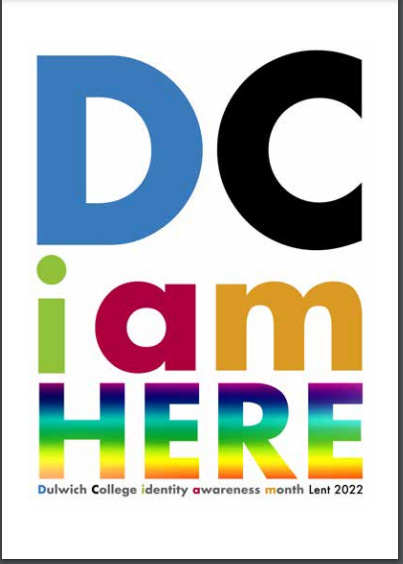
Dulwich College’s “identity awareness month” that the school is celebrating for Lent this year - brochure here.
The Schools Inclusion Alliance (link) that counts many leading independent schools as its partners or supporters. Its Race Toolkit (link here) recycles every patronising cliche about race, using a mostly American discourse - and lexicon - to call on schools to make sweeping changes to their curricula, recruitment and raisons d’etre.
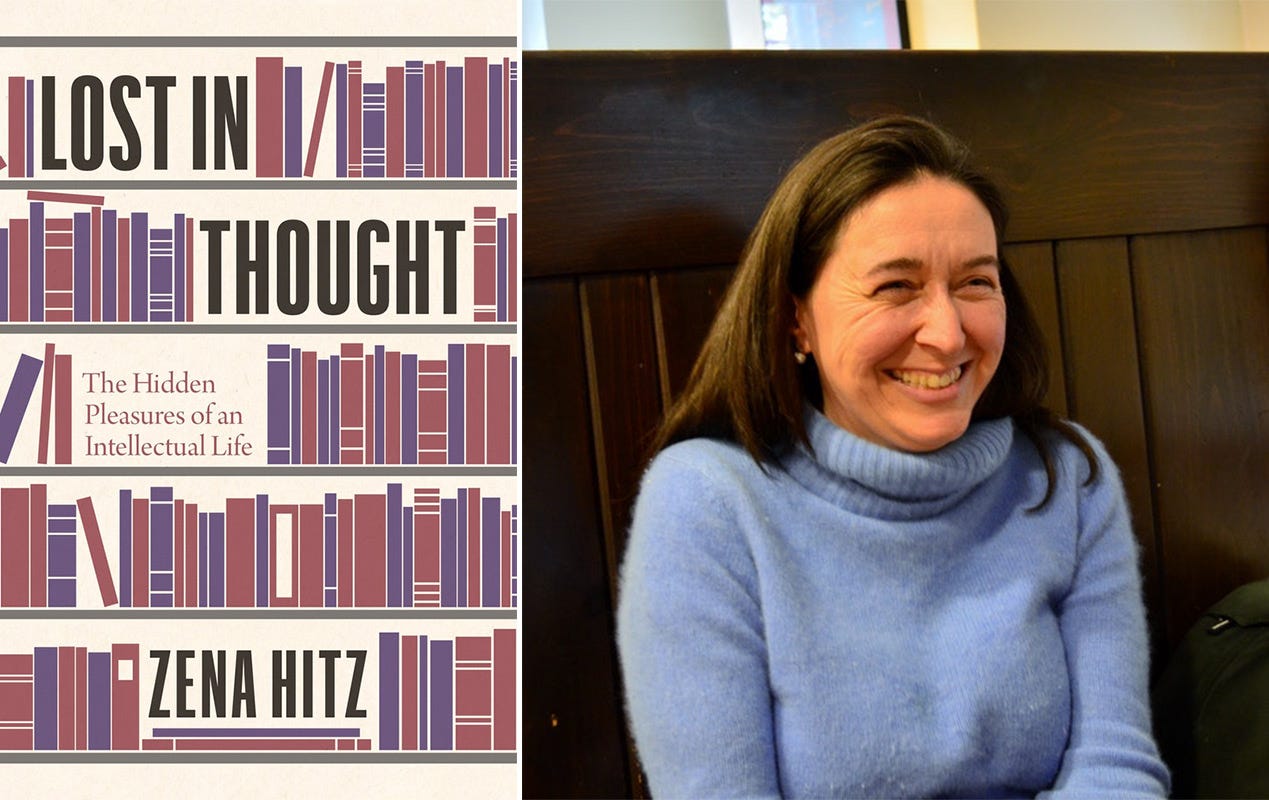
Zena Hitz
I loved reading about Hitz’s work this month - such a great example of a public and public-spirited intellectual.
Here is a good introduction to her book Lost in Thought, an argument for the older definition of the goal of education as upheld by educators like Charlotte Mason:
Like many of the examples she gives in the book, Hitz wanted to get back to the love of learning, learning as an end in itself, rather than learning as a sort-of corporate career. Lots of the examples from Jonathan Rose's book The Intellectual Life of the British Working Classes show people who spend a lot of their time learning for no other reason than for their own satisfaction.
Full piece here.
More remarkable still, she has set up her own online Academy, The Catherine Project, (link here) offering Great Books courses. I’m desperate to try one - but they’re mostly sold out! A deeply exciting and encouraging project.
Relatedly, if you are interested in such projects, do have a look at the Paideia Forum (link), the Oxford Latinitas offerings (link) and InterIntellect - the ‘French salon redesigned for the 21st century’. (link).
Recommended reading
A profile of the lady who wrote Goodnight Moon. This excerpt is just the first paragraph!
Brown was a seductive iconoclast with a Katharine Hepburn mane and a compulsion for ignoring the rules. Anointed by Life in 1946 as the “World’s Most Prolific Picture-Book Writer,” she burned through her money as quickly as she earned it, travelling to Europe on ocean liners and spending entire advances on Chrysler convertibles. Her friends called her “mercurial” and “mystical.” Though many of her picture books were populated with cute animals, she wore wolfskin jackets, had a fetish for fur, and hunted rabbits on weekends. Her romances were volatile: she was engaged to two men but never married, and she had a decade-long affair with a woman. At the age of forty-two, she died suddenly, in the South of France, after a clot cut off the blood supply to her brain.
Full piece here.

—
A friend’s account of her PGCE:
In break-out rooms, we were asked to reflect on our privilege. Misunderstanding, I talked of how grateful I was to have had supportive, well-read parents: while I devoured Jane Austen, many of my peers could barely read, even in Year 11 top-set English.
Full piece here.
—
Henry Oliver’s literature substack has been a revelation. I wrote to him to say how much I enjoyed his writing and, in a delightful echo of Dr Johnson’s London that he writes so well about, we ended up meeting for a great chat in a coffee house.
I’d never come across the word ‘opsimath’: a person who begins, or continues, to study or learn late in life. Here he is writing about one of them in a typical passage:
The obvious person to study is Penelope Fitzgerald. No-one would have marked her out as potentially one of the great novelists of her generation. She was a smart high-achieving student who ended up not applying her talent as a young woman and then lived a difficult and sad life. When she did start writing, at around retirement age, she flourished.
Full piece here - and his related piece on opsimaths here.
—
William Deresiewicz’s blistering attack on educational standards in Unherd left me sad. I remembered the thrill of trying to write such essays at university, and knew I would not have the intellectual discipline to do so now.
What I soon discovered was that none of them had much idea how to make an argument in any context. Nor were they particularly skilled at analysing the arguments of others. They didn’t know how to read; they didn’t know how to write; and they didn’t know how to think.
Full piece here.
—
I wrote this for the Critic on why we need fewer screens in schools:
With children spending on average more than six hours per day online (not even including screen in school), now is the time for a hard reset. It is not too late. Not just that but, if we agree that our society has an unhealthy relationship with screens, schools are in fact the perfect vehicle for such a reverse.
Full piece here.
Wolf Tivy brought together an arresting series in Palladium on cultivating new elites. His contribution, on why elites should quit their job, evoked the old aristocratic ideal of the gentlemanly amateur spirit, drawing on Pieper’s view of leisure:
This is part of why we need an active leisure class in society. Productive exploration requires the application of skilled personal judgment to chasing hunches and interesting problems without narrow material and objective constraints. It is generally unfair and wasteful for this to be anything but voluntarily self-funded, though some well-designed research institutions can effectively simulate productive leisure and accelerate the exploration process. Thus, speculative exploration is a special duty of those with means.
To make such bets you must be indifferent at some level to whether you end up a king or a monk, or even dead. The indeterminate hedge-trader with his logarithmic utility function assigns infinite negative utility to ruin. The man of action serenely regards ruin as the most likely possible outcome, mitigates it where he can, and leaps anyway.
Full piece here.